Revolutionizing Medical Imaging The iRay Wireless Flat Panel Detector
Revolutionizing Medical Imaging: The iRay Wireless Flat Panel Detector
In the ever-evolving landscape of medical technology, few innovations have made as significant an impact as the wireless flat panel detector. Among the leaders in this field stands iRay Technology, a company that has consistently pushed the boundaries of what's possible in digital radiography. Their wireless flat panel detectors represent not just an upgrade from traditional systems, but a complete reimagining of how medical imaging can be conducted.
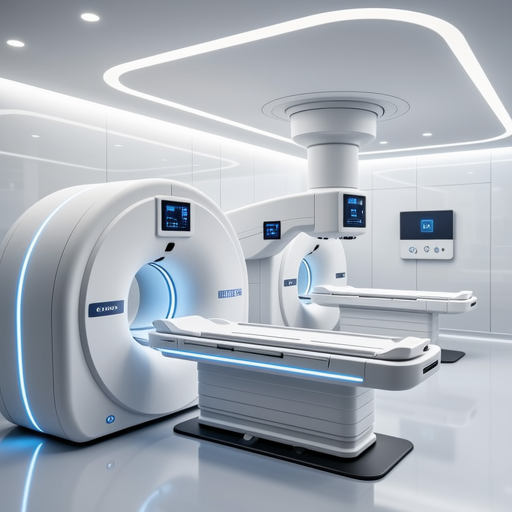
A contemporary medical imaging environment utilizing wireless flat panel detector technology
The Technical Marvel Behind Wireless Operation
What truly sets iRay's wireless flat panel detectors apart is their sophisticated engineering. Unlike traditional wired systems that restrict movement and positioning, these detectors utilize advanced wireless protocols to transmit high-resolution images in real-time. According to technical specifications from iRay's official website, their detectors employ proprietary compression algorithms that maintain image integrity while minimizing data transmission requirements.
The detectors typically feature amorphous silicon or cesium iodide scintillators that convert X-ray photons into visible light, which is then captured by a photodiode array. This process, as detailed in research published by the Radiological Society of North America, allows for exceptional dynamic range and contrast resolution that surpasses traditional film-based systems.
Clinical Applications and Benefits
In clinical settings, the advantages of iRay's wireless technology become immediately apparent. Emergency departments benefit from the detectors' portability when dealing with trauma patients who cannot be easily moved. Orthopedic clinics appreciate the flexibility when imaging extremities at various angles. Veterinary practices have found particular value in these systems when working with large animals that cannot be positioned on traditional tables.

Wireless flat panel detector being used in a clinical examination setting
A study referenced by AuntMinnie.com, a leading radiology news source, demonstrated that wireless detectors reduced patient setup time by approximately 40% compared to wired systems. This efficiency gain translates directly to improved patient throughput and reduced wait times in busy healthcare facilities.
Image Quality and Diagnostic Confidence
Beyond convenience, the true measure of any imaging technology lies in its diagnostic capabilities. iRay's wireless flat panel detectors typically offer pixel pitches ranging from 100 to 150 microns, providing resolution that meets or exceeds regulatory requirements for most diagnostic applications. The detectors' wide dynamic range (often exceeding 16 bits) ensures that both dense and subtle tissue variations are captured in a single exposure.
As noted in technical reviews from Imaging Technology News, the absence of cables eliminates potential sources of image artifact that can sometimes plague wired systems. This results in cleaner images with fewer retakes, ultimately reducing patient radiation exposure while improving diagnostic confidence.
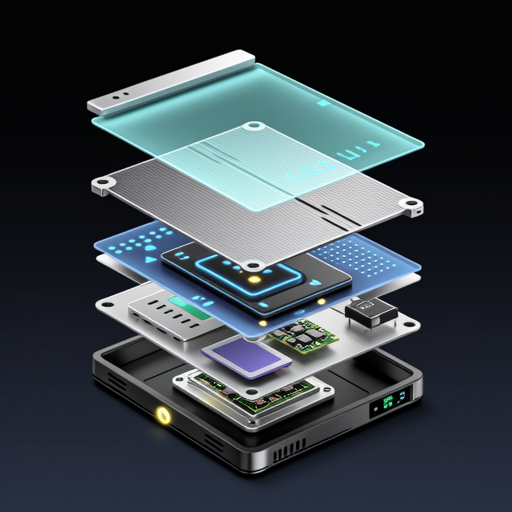
Diagram illustrating the internal components and wireless transmission of a flat panel detector
Workflow Integration and Connectivity
Modern healthcare depends on seamless integration between devices and information systems. iRay's wireless detectors typically support DICOM standards and integrate smoothly with Picture Archiving and Communication Systems (PACS). The wireless connectivity extends beyond mere image transfer—many models include remote diagnostics, firmware updates, and usage tracking capabilities.
According to implementation guides from healthcare IT consultants cited by Healthcare IT News, facilities implementing wireless detectors have reported significant reductions in cable management issues and equipment damage. The elimination of physical connections between detector and workstation has also allowed for more flexible room designs and equipment arrangements.
Durability and Maintenance Considerations
Medical equipment must withstand demanding clinical environments. iRay's wireless detectors are typically housed in ruggedized casings that resist impacts and liquid ingress. The wireless nature itself contributes to durability by eliminating vulnerable cable connections that frequently fail in wired systems.
Battery technology represents a critical component of wireless detectors. Most iRay models utilize lithium-ion batteries with smart charging circuits that optimize battery life. Technical specifications indicate typical operational times of 8-10 hours on a single charge, with rapid charging capabilities that minimize downtime between uses.

Testing the durability and robustness of wireless medical imaging equipment
Future Developments and Industry Trends
The trajectory of wireless detector technology continues upward. Industry analysts following companies like iRay anticipate several key developments: increased integration with artificial intelligence for image enhancement and preliminary analysis, improved wireless protocols for faster image transmission, and enhanced portability through lighter materials and more efficient designs.
Market research from Frost & Sullivan suggests that wireless detector adoption is growing at approximately 15% annually, driven by both new facility construction and retrofitting of existing imaging suites. This growth reflects broader trends in healthcare toward more patient-centered, efficient, and technologically advanced care delivery.
Conclusion: A Transformative Technology
iRay's wireless flat panel detectors represent more than just another piece of medical equipment—they embody a shift in how healthcare providers approach diagnostic imaging. By eliminating physical constraints while maintaining or improving image quality, these devices enable more flexible, efficient, and patient-friendly imaging experiences.
As healthcare continues to evolve toward more mobile and patient-centric models, technologies like wireless detectors will play increasingly important roles. For facilities considering imaging upgrades or new installations, wireless flat panel detectors from innovators like iRay offer compelling advantages that extend far beyond the simple convenience of fewer cables.
The future of medical imaging is wireless, and with companies like iRay leading the development, that future promises better diagnostics, improved workflows, and enhanced patient care across the healthcare spectrum.